
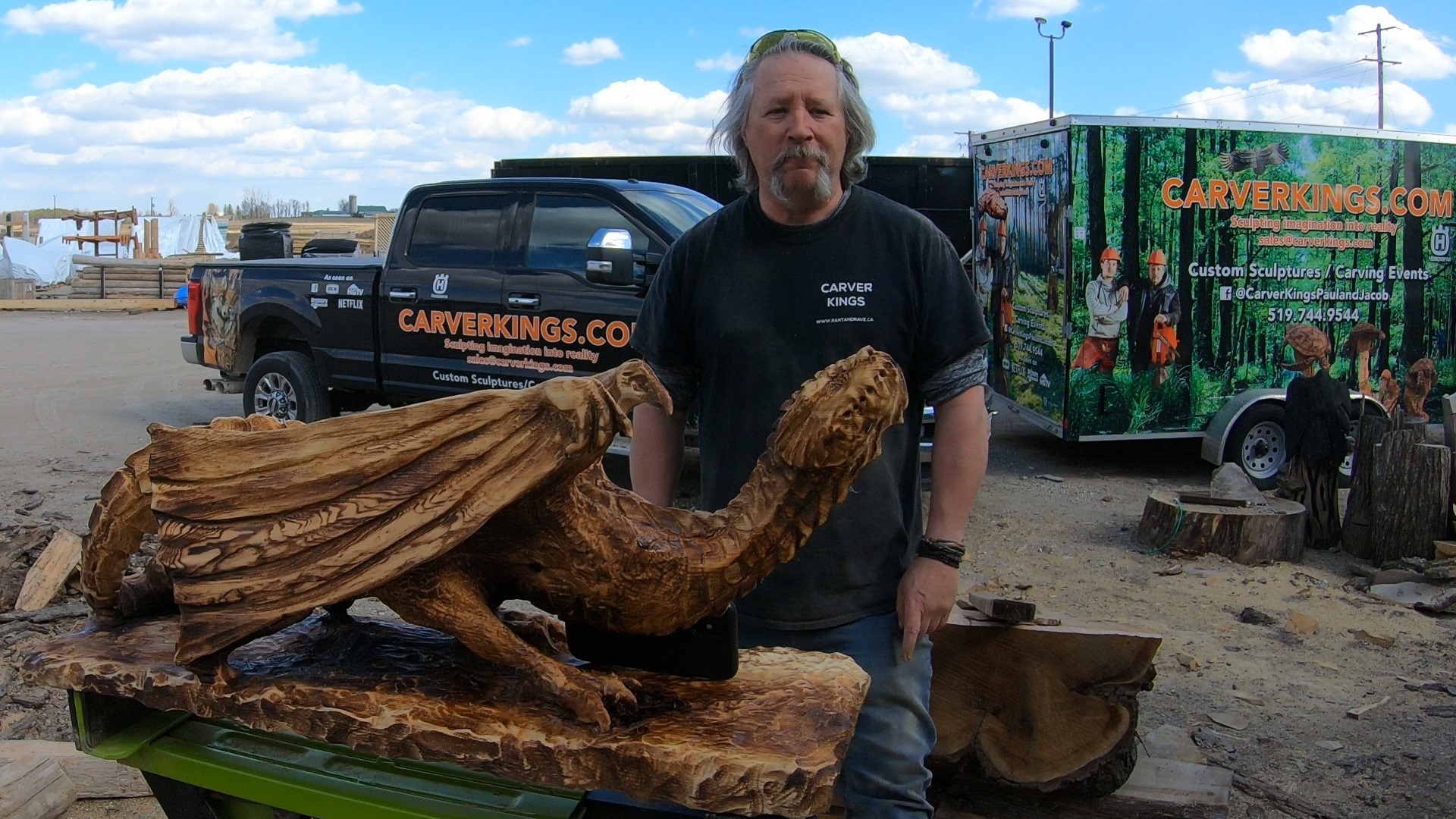
Are you interested in learning how to carve a dragon from wood? In this comprehensive 4-part tutorial series, master chainsaw carver Paul Frenette walks you through the complete process of creating a stunning wyvern dragon sculpture from start to finish. Whether you’re a beginner looking to learn chainsaw carving techniques or an experienced woodworker wanting to tackle a complex project, this step-by-step guide covers everything from initial blocking out to the final finishing touches. Watch as a piece of white cedar transforms into an intricate 3-foot dragon with detailed scales, horns, wings, and claws.
What is a Wyvern?
Wyvern (pronounced “WY-vern”) is a winged two-legged dragon with a barbed tail. This mythical creature is a popular choice for chainsaw carving because its unique anatomy creates an impressive visual impact while remaining achievable for skilled carvers.
Tools & Materials You’ll Need
To carve a wyvern dragon like Paul does in this series, you’ll need:
– Quality chainsaws (multiple sizes for detail work)
– Die grinders and angle grinders for fine detailing
– Hand carving tools and chisels
– White cedar wood (or similar carving wood)
– Protective gear (safety glasses, gloves, hearing protection)
– Clear wood sealant or polyurethane for finishing
## Part 1: Initial Blocking & Shape Development
Part 1 of this dragon carving series shows the crucial first step where Paul blocks out the basic wyvern shape from the white cedar log. The wyvern wood carving is approximately 3 feet long and will be carved entirely with chainsaws. This initial phase is where you establish the overall proportions and main body shapes—the foundation for everything that follows. You’ll see how the experienced carver visualizes the final dragon within the raw wood and begins rough-cutting the basic form. The blocking stage requires patience and precision, as mistakes here become much harder to correct later. Watch Paul demonstrate proper chainsaw technique and how to safely remove large sections of wood while maintaining control.
## Part 2: Adding Detail & Refining the Form
Part 2 shows the dragon coming to life as Paul carves out more of the detailed shapes and proportions. Using power tools like die grinders and angle grinders combined with hand tools, he begins revealing the wyvern’s true character. This phase involves careful detail work on the dragon’s wings, legs, head, and body contours. You’ll witness how the combination of power tools and artistic skill creates smooth transitions and realistic proportions. This is where the sculpture transforms from a rough block into something recognizable as a dragon. Paul demonstrates the importance of step-by-step refinement and how working in stages prevents irreversible mistakes. The techniques shown here are essential for any chainsaw carving project.
## Part 3: Fine Detail Carving – Scales, Horns & Features
Part 3 is where everything comes together through fine detail work. This is the most time-intensive phase where Paul carefully carves the dragon’s scales, horns, claws, wings, and facial features. Each detail requires precision and artistic vision to bring the wyvern to life. You’ll see how professional carvers handle small details without damaging surrounding elements. The fine detailing process shows patience and technique—this is where the wyvern truly transforms from a sculpture into a lifelike dragon. Watch as Paul demonstrates how to create realistic scale patterns, sharp claws, and expressive facial features that give the dragon personality. This phase demonstrates why chainsaw carving requires both technical skill and artistic ability.
## Part 4: Finishing & Clear Coat Application
The final part of this wyvern carving tutorial shows the finishing details on the dragon’s legs, chest, and spine. Paul completes the fine details and then applies a professional clear coat finish that brings out all the carved details and wood grain. The clear coat is essential not only for aesthetics but also for protecting and preserving the wood from weathering and UV damage. You’ll see the complete finished dragon for the first time, revealing all the intricate work that went into the sculpture. The finishing process is crucial to the overall appearance and longevity of your chainsaw carving projects. This final step transforms the raw wood carving into a polished, gallery-quality piece.
Ready to Commission Your Own Dragon Carving?
If this wyvern carving series has inspired you, Carver Kings can create a custom chainsaw carving dragon just for you! Whether you want a 3-foot wyvern like Paul’s version or a different mythical creature, we design and carve custom wood sculptures for homes, gardens, and businesses across Canada.
[CTA SECTION – NEW]
- 📞 Ready to commission a custom carving? Contact Carver Kings Today
- 📧 Questions about the process? Reach out to discuss your vision
- 🎬 Want more tutorials? Subscribe to our YouTube channel for additional chainsaw carving techniques https://www.youtube.com/@CarverKingsOfficial
Key Takeaways from This Tutorial
✓ Chainsaw carving requires careful planning and multiple phases
✓ Start with proper blocking before moving to details
✓ Combine power tools with hand tools for best results
✓ Fine detailing is where the artwork truly comes alive
✓ Professional finishing is essential for preservation and beauty
If you enjoyed this series or learned from it, please share this video on your social media and subscribe to our YouTube channel. Your support helps us create more detailed tutorials and showcases the art of professional chainsaw carving!